
On the importance of having a full toolbox
Have you ever been in a situation where you have a hammer and a screwdriver and are staring at a bolt and nut that needs a spanner?
Or when you need to cut a piece of wood and have everything but a large bow saw?
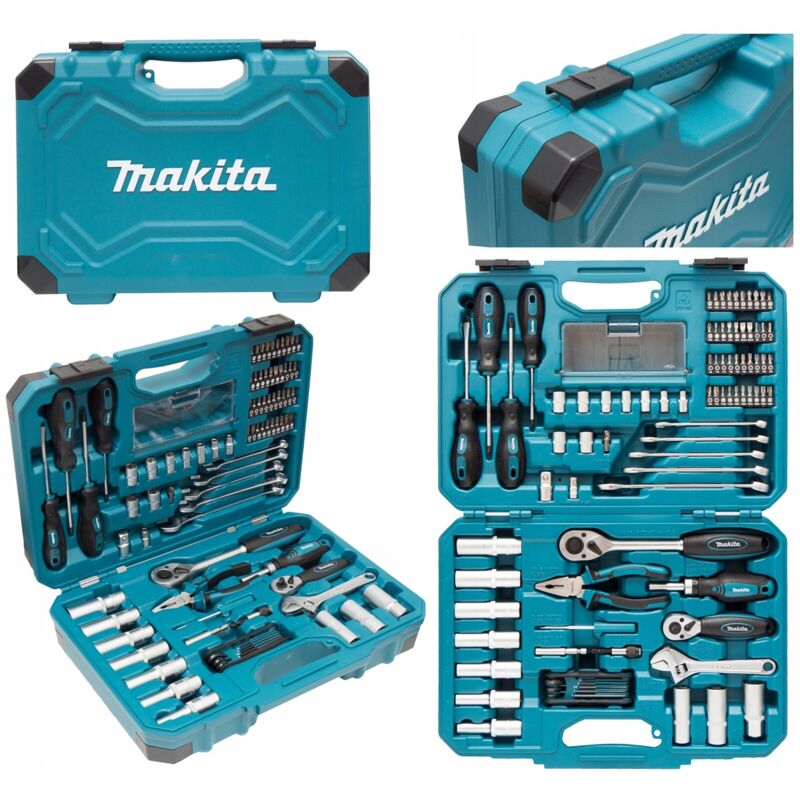
All you want is a complete toolbox.
Have you ever been in a situation where you thought something was really difficult, like getting a bike tyre back on, until someone handed you a tyre lever and they just slip on and you release you had been suffering totally pointlessly?
Now the next questions: would you ever want your child to experience that across their whole life in important areas? Would you ever deliberately let them go into the world with an incomplete set of tools, despite knowing they will need them? Would you ever let them just messily pick and mix tools to make up a poorly organised set of outdated tools that you knew would cause them problems in multiple areas?

This was exactly the thought of Alec Peterson who founded the International Baccalaureate. He realised that back then, and still now, national systems systematically ensure children enter the world without a full set of tools. Take my father, who is typical of his generation. He was very good at maths and science, and so why bother with arts? Why bother with history? Why bother with literature? He took maths, further maths and science and went on to study maths and physics. When he got his first job at Winchester College, he suddenly realised he had entered the world with at best half a toolkit. He had to start backfilling literature, art and culture just to fit in with the culture- reading novels, reading philosophy as quickly as he could to make up for years of absence. When he became a head of school, he then had to start back filling history, politics and human sciences to make up for his lack of understanding about how groups of people behave and how to lead. When he started to have to write position papers for committees he was on for land ownership reform in Scotland, he had to go back and learn to write effectively to make compelling arguments based on evidence but appealing to emotion. He spent his life trying to backfill a half empty toolbox. National systems that reduce course choices to a version of stamp collecting, without any awareness of what tools are needed to thrive in the world, are systematically set up to leave children in that position. They even vaunt it: 'we allow children to specialise early' is another way of saying, we allow them to drop all their spanners, leave the toolbox half empty, in the hope that everything they meet in the world is a nail. It's not a great strategy, frankly.
Why would you set up an education system to consciously allow that? That is exactly what national qualification systems in the UK still do, despite the government's various periodic panics about introducing a 'British Baccalaureate' or any other of the failed attempts to reform that never work because the willpower, teaching training and money is not there. Because the garage roof is leaking, nobody's got time to worry about whether the toolbox is missing tools or complete.
Alec Peterson saw things differently. A child's learning is about being ready for the world, to thrive, to make a difference, to lead a good life. Children should learn 'humankind's main tools of thought' and so should study a subject in each group of language and literature, language acquisition, maths, science, humanities and arts until they are 18 to the toolbox is complete - even if they can focus towards strengths with 'higher levels' alongside standard levels. You might not have 20 spanners, but at least you'll have 10. They should also study design and physical education until 16, and creativity, action and service until 18. They need this because each group of subjects has a different set of tools to make sense of the world. More than that, they should learn 'theory of knowledge' which is a subject that addresses how to use these tools together.
We are repeatedly told by our graduates that university is easier for them than their peers because they are so well prepared, 'I had to write an essay and I was the only one in my class that knew how to research and reference my work', 'we looked at the ethics of science and I was the only scientist that felt comfortable discussing moral ambiguity and paradigms of research', 'we had to write a research proposal and I was the only economist who had studied language and literature, so I found it easy and I was well prepared', 'I was the only student on the student union who understood the major factors that shape bias due to my theory of knowledge class'. Again and again. That is what we mean by a broad high quality programme. Here's our toolbox. It's a powerful thing to have a complete tool box.

Comments
Post a Comment